
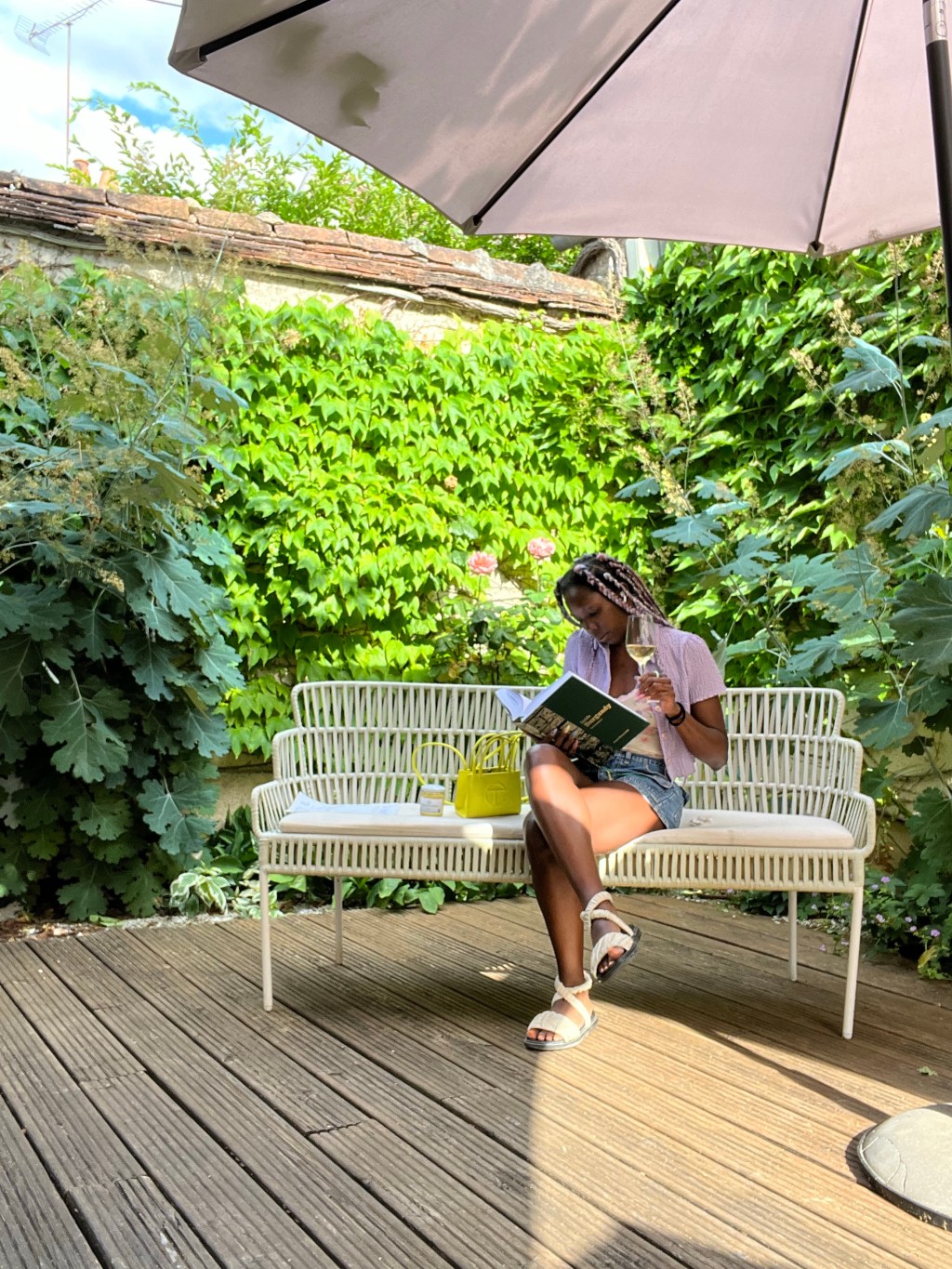
Day three in Chablis with Black Wine Professionals was the most full day of the trip. The Bourgogne Wine Board started off bright and early inside one of the most revered wineries in the region; Domaine Francois Raveneau. Dating back centuries, this family owned winery has produced wines of legendary quality that warrant a cult-like following, but the elegant winemakers believe in tradition, and that is understanding they are farmers and caretakers of this earth first and foremost.
Mainly comprised of grand and premier cru vineyards, the mindful and delicate hands of the Raveneau’s bring a elevated elegance to the even the few rows of Petit Chablis that bear the crest of the family. “These are vines with altitude,” Isabelle Raveneau states. “They are very well treated and the winemaking is the same and the yield is very reasonable as well. The cool fresh air and the heat from the rocks creates a nice balance between freshness and ripeness.” It was only the beginning of our tasting, but the pinging minerality mixed with the fresh orchard and citrus made it hard to move on to the next wines.
This family has been in Chablis for centuries as winemakers, but sold off the finished product, and eventually Louis Raveneau sold off parcels of land to make ends meet. It wasn’t until his son, Francois Raveneau married into the Dauvissat family that he began to cultivate, bottle and sell the wines under his own name, repurchasing plots his father had sold off. Though bottles of both sides of the family may be well over the $100 mark in restaurants, Isabelle and her family maintain a “vinecentric” attitude; it’s not about me, it’s about the grapes. All of the wines we had tasted were from the 2021 vintage, so our palates were able to traverse through the array of soil and aspect and how they mold and shape the wine. With each taste of wine from the barrel, Isabelle showed how her families legacy of highlighting plots and put a magnifying glass to the soil sun and fruit radiating from the glass.
With each taste, she watched our eyes and mouths more intensely, mindfully guiding us through the vines, ratcheting up the flavor profile as we dreamed our way through food pairings. A roasted chicken with fresh thyme and rosemary on rye bread with heirloom tomatoes for the Vallions, a shrimp ceviche for the Petit Chablis, a suckling pig with kale for the Le Clos, each pairing served outside. The vividness of imagery Raveneau wines creates is one only a producer who understands the delicate balance of man and nature can attain. The taste of fresh air can only come from a producer who themselves want the best for the earth and the wine.
Often when we think of negociants, we think of out of touch brokers who gobble up properties and churn out as much wine as possible. The BIVB knows that’s not really the case, and set out to make the case for the natural negocee.
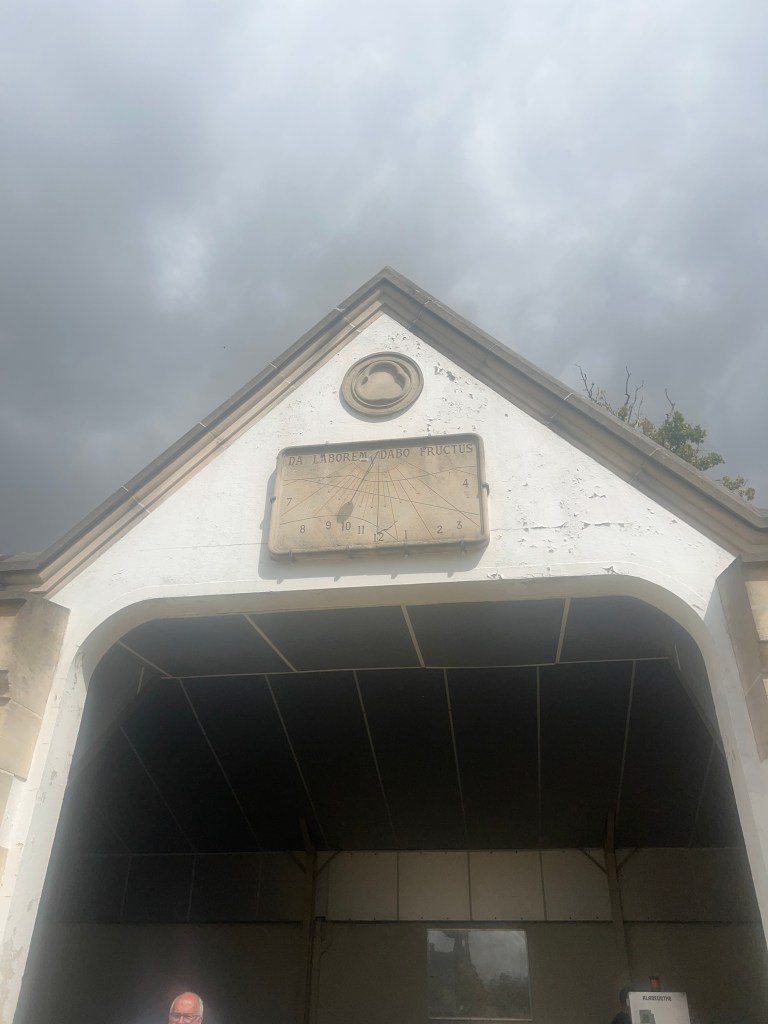
The Fevre family has been winemakers for 13 generations dating back to 1619 and in 1959 William Fevre created a negociant business under his name. He retired in 1988, selling off the business and while we were in Chablis, Domaine William Fevre was purchased by Lafite Rothschild. While the Rothschild’s will own the name, Fevre remains in control of the vineyards and the management of his plots. The commitment to the traditions of the past are evident; the restored negocee mansion the property to its old glory, with customized stained glass windows that pepper the property. There’s even an old school sundial that tells you the sun hour, or the intensity of sunlight at a given time, carved out over the winery doors.
The Domaine is one of the largests in Chablis with 78 hectares under vine and vitifying organically. With such a load of work to do, the winery combines mechanical processes with the traditional use of manual labor; as we walked in a small crew of three were cleaning barrels with a pressure washer. There is a large sorting table upstairs that automatically shuttles grapes to the press and vats below them. To combat frost, they utilize an electrical wire located close to the vines and find this has less of a negative effect on the environment. As a negociant, the domaine pays their growers on the liter of wines created not the weight of grapes picked to ensure quality and a commitment to the organic regiment. Even the yeast to restart stuck fermentations is a selected yeast cultivated from the vineyards around the property.

**There’s an entire post dedicated to our lunch with President of the Chablis Commission of the Bourgogne Wine Board and General Manager of Simonet-Febre at Chablis Wine Not annnnddd Dinner at Kimm&Ridge. STREETS AND EATS BB. **
Almost all of the wineries we had visited had never mentioned a difficulty in farming organic. Everyone agreed, a change in the grape happened when farming was organic, even biodynamic, but no one dived into the cost; until La Chablisenne.
After lunch and diving into the marketability of wines, we marched off to La Chablisenne, a co-op winery founded by the wives of local vignerons who had gone off to war in 1923. These women committed their lands to the cooperative, and now produce over 30 different vintages of award-winning Chablis with a majority holding in grand cru Grenouilles.
La Chablisenne is comprised of 270 grower families in the cooperative with over 1200 hectare under vine and control of over 80% of the largest unbroken Grand Cru Grenouilles but with that many families. to convince, the topic can be a treacherous one. For a cooperative of families that depend on the price of fruit, the demand for organic certification is met with some resistance because “automatically you’re going to lose 20-30% of the fruit and who is going to pay for that? We will pay them more but the cost will come to the consumer” states winemaker Oliver Masondet. The cooperative generally ages their wines for 18-24 months and even if families feel organic wines cannot age as long, “for us it’s no question, the 80% of our vineyards that are lutte raisonnee must go organic. It will be slow, but there is no debate. We have to go all the way.”
Lutte raisonnee translates to “the reasoned fight” and means a winemaker is committed to utilizing an organic method as much as possible. This method of winemaking was birthed as a backlash to the overuse of commercialized pesticides and chemicals of the 1950s and is the precursor to the natural wine movement. *Cough JULES CHAUVET cough* Lutte raisonnee allowed winemakers to return the soil to health while being able to retain as much fruit with as little sulfur spray for the largest economic growth.
Luckily one of my favorite wines of the lineup was the Petit Chablis and is by far one of the biggest bangs for your buck on this deep winelist. “Pas si Petit” translates to ‘not so petite’ and this wine is a fully grown woman, slim thick if you will, and a complete steal of a wine at around $20-$25 dollars retail. The orchard fruits has a small puckering of youthful acidity, but so much complexity from the nearby premier crus, that she is one of their number one sellers.

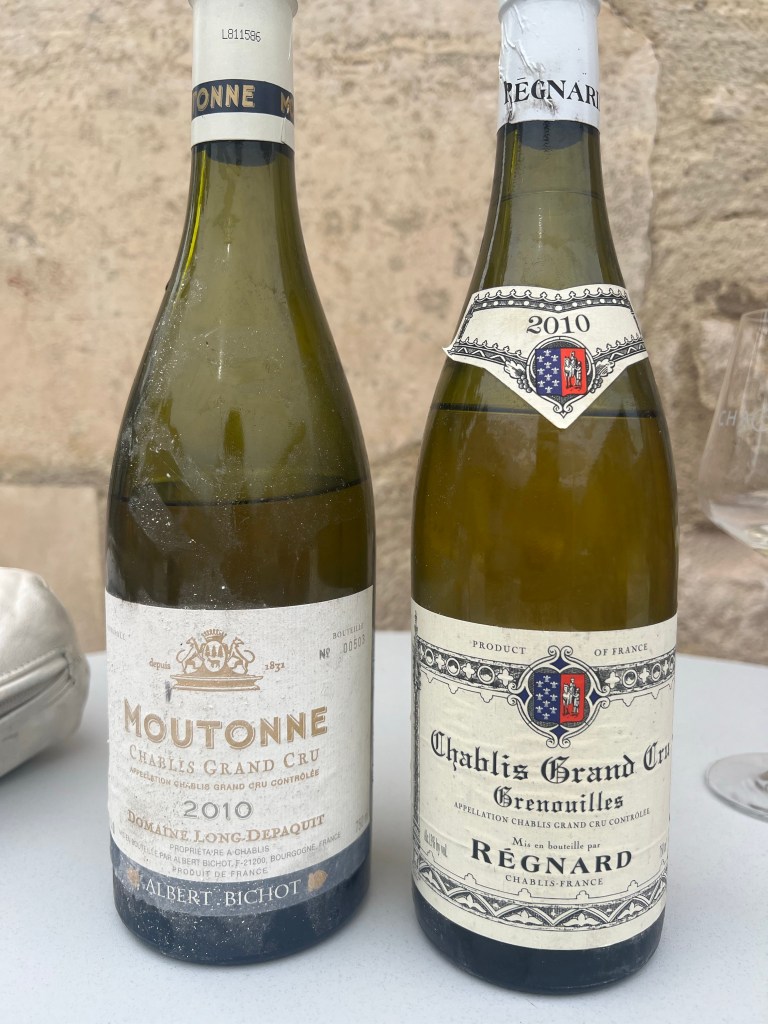
Our last stop is BIVB. headquarters where we have an interview with the Yonne Republique newspaper, and celebrate with 13 year old grand cru Chablis. Moutonne, an unofficial 8th grand cru that never requested aoc recognition is one of two monopoles, vineyards owned by a single person, in Chablis and is still owned by Domaine Long-Depaquit. The second wine we celebrated with was 13 year old Grenouilles from Regnard, another masterful negociant in Chablis and the Loire.


As we celebrated I couldn’t help but wonder, what role did I as a consumer and a sommelier have to play in the demand for certified wines? At what point would I choose to do my own research instead of requiring farmers to become scientists for my convenience? In our obsession for organic, are we pushing away the economic stability of an industry and ancestral way of life?


Leave a reply to Streets & Eats of Day Three in Chablis – boozybushwick Cancel reply